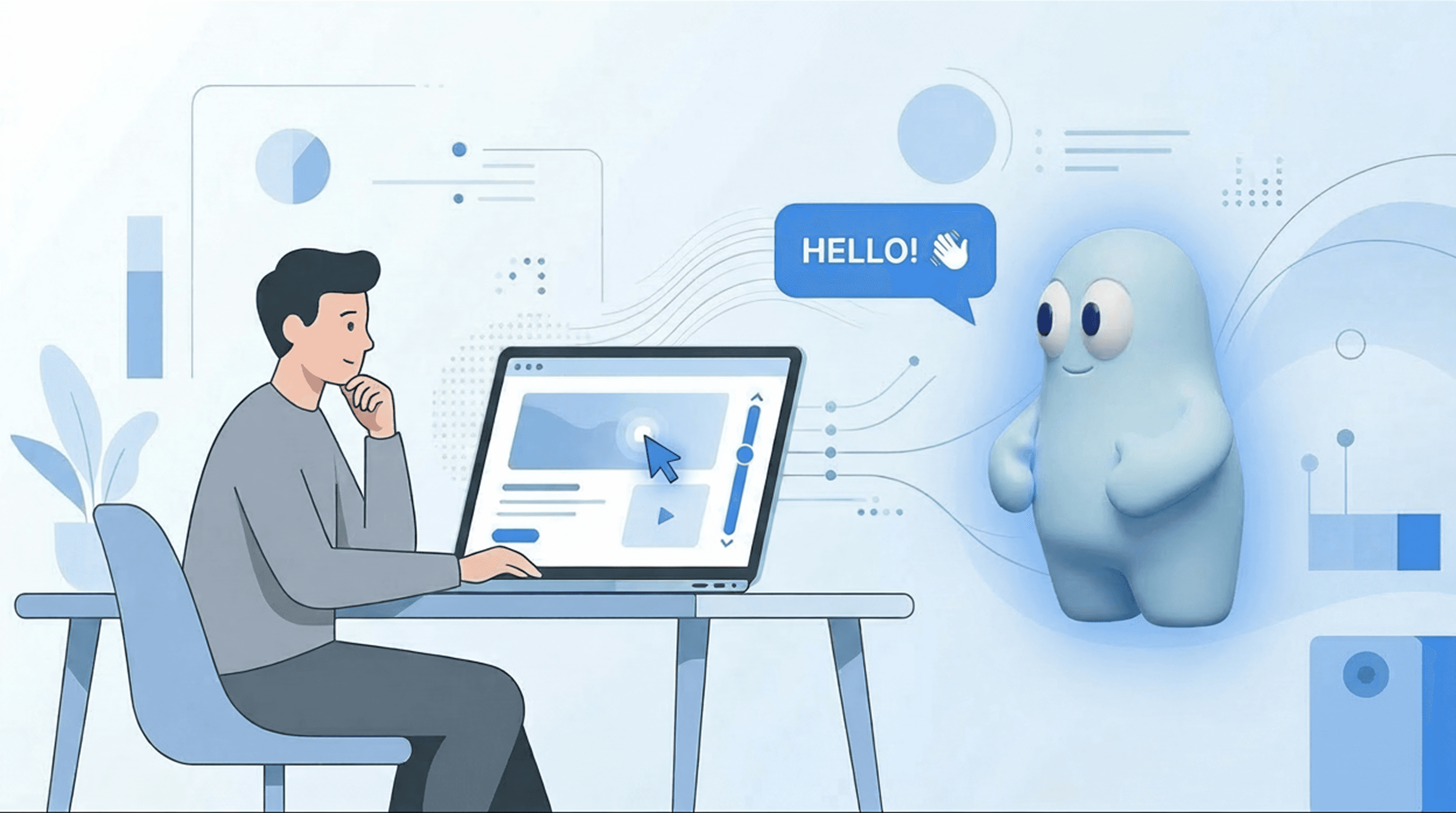
Key Points
- Proactive engagement: AI offers help before customers ask
- Cursor tracking-based intent recognition: Real-time analysis of where customers focus
- Smart nudges: Contextual intervention based on dwell time and exit signals
- 10 industry specializations: Optimized conversation scenarios for fashion, beauty, F&B, and more
Social Agent: Proactive AI That Revolutionizes Customer Experience
Social Agent goes beyond simple chatbots that only respond to questions. It analyzes customer behavior patterns in real-time and initiates conversations at the right moment. By understanding customer intent through cursor movement, dwell time, and scroll position, it provides personalized assistance.
The Limitations of Traditional Chatbots#
The biggest challenge for online businesses is the lack of conversation. In offline stores, skilled staff read customer expressions, gaze, and behavior to provide help at the right moment. But online, conversations don't start unless customers ask questions first.
According to McKinsey's 2025 Customer Experience Report[1]:
- 96% of online visitors don't purchase on their first visit
- Average cart abandonment rate of 70%: Most leave without resolving questions or concerns
- 68% of customer inquiries could be resolved via FAQ, but customers don't search themselves
Traditional chatbots don't solve this problem because conversations only start when customers click the chatbot and type a question first.
Social Agent's Approach: Proactive Engagement#
Social Agent is an AI that approaches customers before they ask. Like skilled offline store staff, it reads customer behavior and offers help at the right moment.
Core Principles#
- Observe → Understand → Act: Real-time analysis of customer behavior data to understand intent
- Contextual Intervention: Providing valuable information suited to the situation, not just simple pop-ups
- Non-Invasive Experience: Natural conversation that feels like help, not interruption
According to Forrester's 2025 report[2], companies that implemented proactive AI intervention experienced an average 35% increase in conversion rates and 42% increase in customer satisfaction.
Core Features#
1. Cursor Tracking-Based Intent Recognition#
Social Agent tracks mouse cursor movement in real-time to understand customer interests.
| Behavior Pattern | Interpretation | AI Response |
|---|---|---|
| 3+ seconds hover on product | Interest discovered | Offer additional info, styling tips |
| Repeated movement between price and product | Price comparison concern | Share discount info, bundle benefits |
| Lingering around size guide | Size uncertainty | Recommend size, explain exchange policy |
| Quick scroll to page top | Exit signal | Offer to save items, propose benefits |
According to Harvard Business Review research[3], online behavior data-based intent prediction accuracy averages 78%.
2. Smart Nudges#
Smart nudges gently intervene at appropriate moments based on customer behavior patterns.
Cart Abandonment Detection
[Customer attempts to navigate back from cart page]

AI: "Wait! The items you selected are almost sold out.
     Complete your purchase now and get free shipping! ✨"
Extended Product Page Dwell
[Customer stays on same product page for 2+ minutes]

AI: "Having trouble deciding on this product?
     Would you like to see actual buyer reviews?
     I can also show you similar style options!"
Scroll Pattern Analysis
[Customer quickly scrolls through review section]

AI: "Too many reviews to find what you're looking for?
     Want me to show you only 'size' related reviews?"
3. Context-Aware Recommendations#
Social Agent provides context-appropriate recommendations by synthesizing current page, previous navigation path, and referenced products.
Recommendation Scenarios
| Customer Situation | AI Recommendation |
|---|---|
| Viewed coat, now on scarf page | "This scarf would look perfect with the coat you viewed earlier!" |
| Comparing multiple products | "Want me to create a comparison chart for you?" |
| 2 items in cart | "Add one more item for free shipping!" |
Industry-Specific Scenarios#
Social Agent provides optimized conversation scenarios for 10 industries.
Fashion (Style Alter-Ego)#
- Style Diagnosis: Personalized recommendations based on body type and style preferences
- Size Guide: Brand-specific size difference guidance
- Outfit Suggestions: Items that complement cart products
Beauty (Glow Maker)#
- Skin Type Analysis: Ingredient and product matching based on concerns
- Usage Guide: Product application order and tips
- Refill Reminders: Repurchase suggestions based on purchase cycles
F&B (Taste Curator)#
- Menu Recommendations: Suggestions based on preferences and allergy information
- Reservation Assistance: Table layout and ambiance descriptions
- Pairing Suggestions: Beverage recommendations to complement food
Education (Learn Guide)#
- Learning Path Design: Curriculum based on current level and goals
- Concept Explanations: Breaking down difficult content
- Progress Management: Learning pattern analysis and motivation
Technical Architecture#
Real-Time Behavior Analysis Engine#
[Customer Browser]
     │
     ▼
┌─────────────────────────────────┐
│  Behavior Tracking Layer       │
│  - Cursor position, speed, pause│
│  - Scroll depth, direction     │
│  - Click patterns, focus areas │
└──────────────┬──────────────────┘
               │
               ▼
┌─────────────────────────────────┐
│  Intent Recognition Engine     │
│  - Behavior pattern classification│
│  - Intent probability calculation│
│  - Intervention timing decision │
└──────────────┬──────────────────┘
               │
               ▼
┌─────────────────────────────────┐
│  Response Generation           │
│  - Context-based message creation│
│  - Brand tone application       │
│  - A/B test optimization        │
└─────────────────────────────────┘
Privacy-First Design#
Social Agent does not collect personally identifiable information.
- Session-Based Analysis: Behavior data anonymized at session end
- Local Processing: Sensitive analysis processed client-side
- Opt-Out Support: Tracking stops immediately upon customer request
Implementation Results#
Quantitative Outcomes (Averages)#
| Metric | Before | After | Change |
|---|---|---|---|
| Conversion Rate | 1.5% | 3.2% | +113% |
| Avg. Session Duration | 2 min | 5 min | +150% |
| Cart Abandonment Rate | 72% | 48% | -33% |
| Customer Satisfaction | 3.6/5 | 4.6/5 | +28% |
Qualitative Outcomes#
- Brand Image: Differentiation as "a brand with AI"
- CS Efficiency: 80% reduction in simple inquiries
- Customer Insights: UX improvement insights from behavior data
Getting Started#
1. Create Basic Agent with Agent Casting#
Just enter your website URL to auto-generate a Social Agent tailored to your brand. Brand tone, product information, and industry characteristics are automatically learned.
2. Customize in AI Studio#
- Fine-tune persona details (speech style, personality, name)
- Configure smart nudge rules
- A/B test conversation scenarios
3. Deploy to Website#
Deploy instantly with a simple script insertion.
<script
  src="https://cdn.voidx.ai/widget/v1/loader.js"
  data-agent-id="YOUR_AGENT_ID"></script>
Conclusion#
Social Agent adds the human touch of offline experiences to online businesses. Providing the help customers want at the moment they need it—that's true customer experience innovation.
The era of chatbots that simply answer questions is over. Now you need AI agents that understand customers and approach them first.
Revolutionize your customer experience with Social Agent. Start Free Trial
Frequently Asked Questions
Regular chatbots passively respond to customer questions. Social Agent analyzes customer behavior data in real-time and initiates conversation when help is needed. It approaches customers at the right moment, just like a skilled offline store employee.
📚 References
- 1🏛️ReportCompany, M. &. (2025) Customer Experience in the Age of AI. McKinsey. https://www.mckinsey.com/capabilities/growth-marketing-and-sales/our-insights/customer-experience-ai
- 2🏛️ReportResearch, F. (2025) The Future of Customer Service: Proactive AI Engagement. Forrester. https://www.forrester.com/report/proactive-ai-customer-service
- 3🔬Academic PaperReview, H. B. (2024) The Science of Customer Intent Recognition. https://hbr.org/2024/customer-intent-recognition